
Address: 2nd Floor, Malerkotla Rd, Near Fashion Point, Sarinh, Ludhiana
Address: 2nd Floor, Malerkotla Rd, Near Fashion Point, Sarinh, Ludhiana
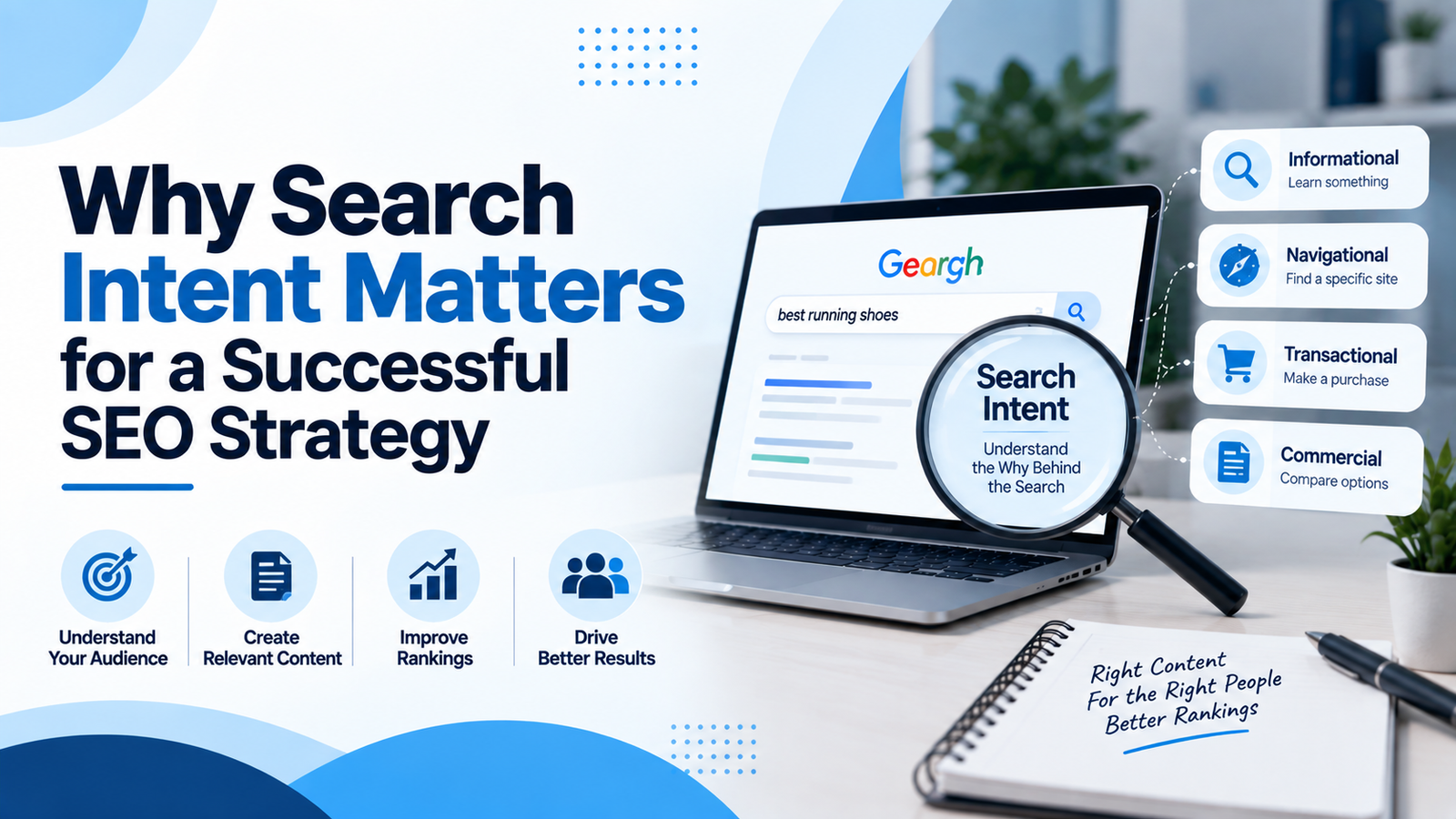
When individuals conduct a search using Google, it is likely that there is always a certain intent behind such actions. They might want to get an answer, reach a certain website, compare different things, or even make a purchase. The term used for this intent is ‘search intent’.
By analyzing the concept of search intent in the context of SEO, businesses can produce content that meets the real needs of users rather than just stuffing keywords on the page. Search intent is very important to understand the needs of their target audience and produce relevant content accordingly.
In other words, SEO strategies should consider what users search for rather than just focus on the keywords.
Search intent means the purpose or motive that drives users to ask their queries through the search engine. For example, an individual looking up for “what is technical SEO” is looking for knowledge, whereas an individual searching for “SEO services in Ludhiana” is researching service providers.
Identifying the motive behind the search query helps businesses to generate content based on the needs of the user.
This is one of the reasons why search intent has become an essential aspect of SEO. It has helped make the concept of content generation more meaningful in SEO.
Among the most important reasons for considering search intent is the desire of search engines to show people relevant and valuable content. In cases where the content relates to the needs of the audience, people will consider it useful.
Here are some reasons why search intent is vital for SEO:
For instance, when people search for “tips on improving website speed,” then it will be much better to present them with an article rather than a sales page for website development.
The first step to develop a good SEO content strategy is to understand different kinds of search intents. There are usually four types of search queries.
Those with informational purpose seek knowledge or an answer.
Examples are:
A blog post, guide, tutorial, or any other educational content is a good fit for an informational search.
Navigational queries are conducted when there is a need to locate a particular site or webpage.
Some examples are:
For such types of queries, users normally know which site or brand they would like to visit.
A commercial search indicates that the user has been searching and will make a decision.
For example:
Comparative content, service guides, reviews, and product/service pages could be effective for this kind of search.
The transactional search shows that the user is prepared to perform an action, which can be either buying a product, getting a service, or making an inquiry.
For example:
Landing page, service page, product page, and contact page may fit for transactional search queries.
There is a strong correlation between the search intent and Google rankings. The search engines seek to know the intention of the search and deliver results based on the intention.
When a person does a search on an informational subject and ends up on a website that only sells a particular service, then that website might not deliver the intended experience.
The same applies when a person searches for a service but ends up with just any informative article.
This is the reason why it helps to identify intent before producing any content.
Take some time to understand user expectation from a specific search query before proceeding with content writing.
Perform a search of the keyword in Google and analyze the results that come up. Observe the nature of the results – whether these are blogs, guides, service pages, product pages, and more.
These results will offer valuable insights into the intent behind the query.
Keywords used in the query also tell about the search intent.
Use of words like “what”, “why”, and “how” can imply that the user wants information on a topic. Use of words like “best,” “review,” or “comparison” could be an indication of commercial research. Use of words like “buy,” “hire,” or “price” may show the transactional intent.
A good keyword strategy should not focus on the number of searches alone. Think about what the user is searching on the browser.
It is better to choose keywords based on relevance to the content than just using the ones that have higher search volume.
Search intent optimization techniques that are effective involve making the content useful to the needs of the user.
In case the keyword is for an informative purpose, give a proper definition to it. In case the keyword is for a commercial purpose, make comparisons and give advantages to it.
Provide users with all necessary information without unnecessary complication. Use headings, short paragraphs, lists, examples, and simple language.
The key words should assist the topic and not disrupt the flow of reading.
Search intent may alter as behaviors and trends in search change. Update any outdated content in essential pages on a regular basis.
The importance of relevancy cannot be overstated, but at the same time it is necessary to make your site attractive. It means that your site should be fast and user-friendly especially on mobile gadgets.
When you want to know how to optimize your content based on search intent, the first thing to do is understand what the purpose of the page is even before you create it.
You should be asking:
With these in mind, you should now create content that will cater to the needs of the users.
In the case of an informational query, it should teach the reader about something. For transactional queries, a service page can address it.
SEO-friendly websites have the responsibility of providing clear information and making it easy for both people and search engines to understand each page.
The contents should be grouped into various sections and appropriate headings applied. Related pages should be linked through internal linking for people to access more information.
For instance, if you are running an informative blog on search intent, it will be very easy for you to create internal links with other pages such as those of keyword research, SEO services, technical SEO, and website optimization.
Taking into consideration the search intent as part of the SEO strategy enables companies to go further than just picking keywords. Instead of simply asking, “What keyword should we use?”, one can ask, “What does the user, who is searching this keyword, need?” This will enable one to develop content for various stages of the buying cycle.
For instance:
However, search continues to change, and companies are also taking notice of search optimization using AI. With AI search experience, people can be provided with direct answers and summary information from different sources.
Creating useful and well-structured content can go a long way toward preparing companies for changes in the search experience.
Search intent in SEO helps companies produce content based on the needs of their target audience. When understanding the intent behind the search, picking up on the correct format of content and giving the information, a company can implement an effective SEO strategy.
The point is to think not only about keywords. Prior to making a webpage, one should comprehend what people are searching for and provide the necessary content in return.
If you want to increase the visibility of your site and develop an effective SEO strategy which would take into account the needs of users, contact DigiWorkup for help.
Four common types are Informational, Navigational, Commercial, and Transactional Search Intent.
Keyword analysis, Google search analysis, competitor analysis, and even analysis of the expected information/action by the user can be done.
Regularly revise significant material based on variations in the results of searches, user activity, or the purpose of the keyword.



 Digi_workup